Buying guide
Radley smartwatch models compared: which Series should you buy?
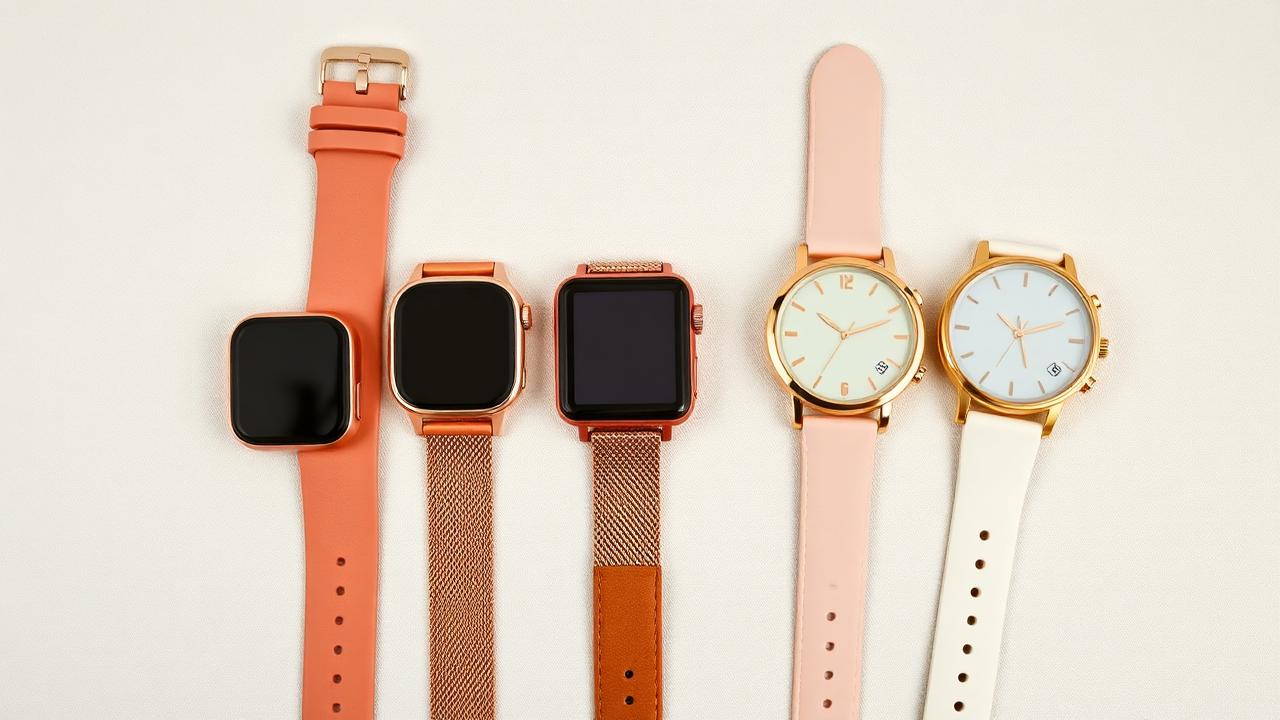
Radley's smartwatch naming is genuinely confusing. The numbers aren't generations of the same watch (a Series 33 is not "25 versions newer" than a Series 8). They're different product lines that coexist at different price points, and older Series stay on sale at retailers for years. Add in the fact that stock is spread across Radley's own site, Argos, H. Samuel, House of Fraser and independent jewellers at wildly different prices, and it's easy to buy the wrong watch.
This guide untangles the current range. Everything here is checked against retailer listings at the time of writing; prices move around (these watches are discounted constantly), so treat the figures as typical street prices rather than gospel.
The short version: buy the Series 8 if you want a simple, pretty activity tracker for under $51; the Series 21 if you want that but smaller and slimmer on the wrist; the Series 20 if you want Bluetooth calling from your wrist; and the Series 33 if you want the nicest screen Radley currently offers and the most complete feature set. The Series 32 sits awkwardly between the 8 and 33 and is worth it mainly when heavily discounted.
The current range at a glance
Swipe to compare
| Feature | Series 8 | Series 21 | Series 32 | Series 20 | Series 33 |
|---|---|---|---|---|---|
| Type | Activity tracker | Slim activity tracker | Smart watch | Smart calling watch | AMOLED smart watch |
| Case size | ~37mm square | ~25mm slim | ~37mm | ~37mm | ~37mm |
| Display | Colour LCD | Compact colour | Colour LCD | Colour LCD | AMOLED |
| Bluetooth calling | No | No | No | Yes | Yes (model-dependent) |
| Typical price | $44–51 | $67–76 | $57 | $85–114 | $121–127 |
| Best for | First tracker, gifts | Small wrists | Budget all-rounder | Answering calls | Screen quality, flagship feel |
All models share the same core platform: they pair with the RADLEY SMART app on iOS and Android, track steps, heart rate and sleep, mirror notifications from your phone, offer multiple sports modes, and claim up to around seven days of battery life in typical use (expect less with heavy notification traffic or always-on features). None of them has standalone GPS. Distance for outdoor runs uses your phone's GPS or wrist-motion estimates.
Series 8, the entry point ($44–51)
The Series 8 is the watch most people are picturing when they think "Radley smartwatch": a rounded-square case, rubber or silicone strap with gold- or rose-gold-toned detailing, and the essentials done simply. Steps, heart rate, sleep, notifications, basic sports modes.
Its limitations are the flip side of its price. The screen is the dimmest in the range and can struggle in bright sunlight, there's no calling, and the strap options are sportier than the leather-and-bracelet looks of the dearer models. But as a first tracker or a gift where you're not certain the recipient will wear it daily, it's the sensible pick. It does 80% of what the Series 33 does for a third of the money.
Buy it if: you want the Radley look and basic tracking at the lowest price. Skip it if: you'll use it outdoors a lot (screen brightness) or want calls on your wrist.
Series 21, the small-wrist option ($67–76)
The Series 21 takes the tracker formula and slims it down to a roughly 25mm-wide case, closer to a Fitbit-style band than a watch. If the standard 37mm cases look oversized on your wrist (a common complaint with women's smartwatches generally), this is the one to try on. Feature-wise it matches the Series 8 tier: activity, heart rate, sleep, notifications. You pay a modest premium for the slimmer engineering.
Buy it if: standard smartwatches look huge on you, or you want something discreet under a sleeve. Skip it if: you want a bigger screen for reading messages, since the compact display shows less at once.
Series 32, the in-betweener (~$57)
The Series 32 is a full-size smart watch at a near-tracker price, and at its regular ~$57street price it undercuts the Series 21 while offering a bigger display. It comes in a wide colour range (berry, navy, pink, blue). The honest assessment: it exists to hit a price point. It doesn't add calling or an AMOLED screen, so its appeal depends entirely on the discount you find it at. At $57 it's decent value; if you see it near the Series 20's price, buy the 20 instead.
Buy it if: you find it discounted and want a full-size watch face on a budget. Skip it if: the Series 20 is within $19–25 at the time you're shopping.
Series 20, the calling watch ($85–114)
The Series 20 (and the closely related Series 19) is where the range steps up: it adds Bluetooth calling, meaning the watch has a microphone and speaker and can make and answer calls through your paired phone. You can keep your phone in your bag and take a call from your wrist. It's genuinely useful, and the feature most owners upgrade for. Many Series 20 listings come as interchangeable strap sets (typically a silicone strap plus a leather one), which softens the higher price.
Two things to know. First, calling requires a secondary Bluetooth pairing in addition to the app pairing. This is the single biggest source of setup confusion, and we walk through it step by step in our troubleshooting guide. Second, call audio quality is fine for "I'm on my way" conversations, not for long calls in noisy places.
Buy it if: wrist calling is the feature you actually want, or you like the two-strap sets. Skip it if: you'd never take a call on your watch, because the Series 8/32 do the rest for less.
Series 33, the current flagship ($121–127)
The Series 33 is the top of the current range, and the headline is the AMOLED display: deeper blacks, punchier colour, and far better legibility in sunlight than the LCD panels on every other Radley. It comes in dressier finishes (rose-gold-tone bracelets, pink leather) that read as jewellery rather than gym kit, and it carries the most complete feature set in the range.
At $121–127 it's still cheap by big-brand smartwatch standards, but you should be clear-eyed about what the extra money buys: a much better screen and nicer materials on the same fundamental platform. It won't run apps, and battery life is similar to its cheaper siblings.
Buy it if: you want the best screen and the most watch-like styling Radley makes. Skip it if: you're screen-agnostic, since the Series 20 has calling for $25–38 less.
Where to buy (and the discount pattern)
Radley smartwatches are stocked by Radley's own site, Argos, H. Samuel, House of Fraser, First Class Watches, Chapelle and others, and they are discounted almost permanently somewhere. The pattern worth knowing: Radley's own site clears older colourways aggressively (smartwatches have appeared at $65–84 in clearance), while independent jewellers often have the widest Series 33 colour choice. Before buying, check at least two retailers; a 20–30% spread on the same model is normal. Older Series (06, 07) still surface in clearance. They're fine watches, but you're buying an older platform, so only do it at a steep discount.
What none of them will do
To keep expectations honest: no current Radley smartwatch has standalone GPS, contactless payments, music storage, or third-party apps. They mirror your phone rather than replace it. If those features matter to you, you're shopping in the wrong range, but you'll also be spending $254+ elsewhere to get them.
Prices are approximate, converted from GBP at a fixed rate.
Next: got your watch? Our setup and troubleshooting guide covers pairing, notifications and the calling feature, and our strap guide covers sizing and replacements.